The world of data analysis has transformed dramatically in recent years. With generative AI integrated into SQL data
analysis, anyone can now talk to their data. As I've been learning data analysis, I've realized that AI-powered SQL tools are more than just technical aids they open up new possibilities for growth and learning. Yet, I sometimes worry: "Does relying on AI make me seem less skilled?" In this post, I’ll share my thoughts on the benefits of using AI for SQL data analysis, the skills we still need to develop, and my next steps in this learning journey.
AI and SQL: Making Data Conversations Effortless
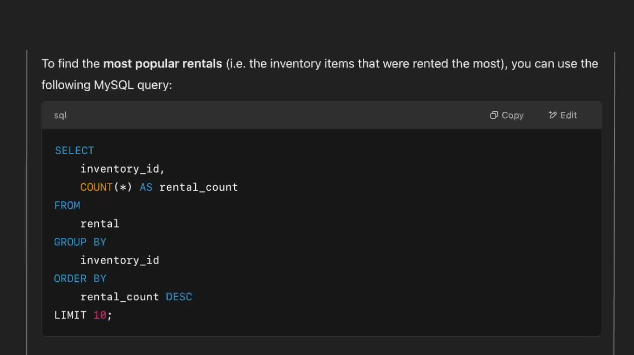
When I first started learning data analysis, SQL was a huge hurdle. Studying for an SQL certification took months of grappling with syntax, joins, and subqueries. But now, I can save my time to think about how to make query by using the AI tool. Sometimes, it even optimizes the query by analyzing the database structure. It feels like having a conversation with the data itself.
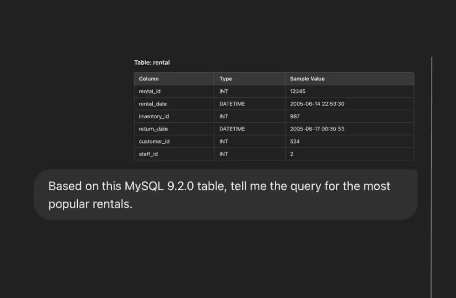
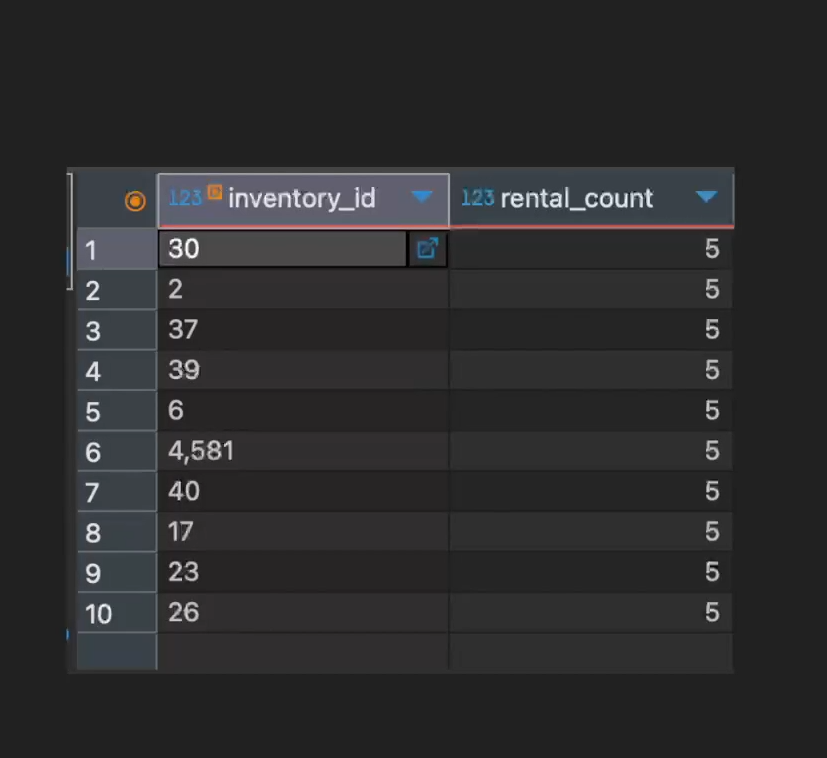
here is the simple example how to use AI tool to get SQL query.
The Misconception: "Using AI Means You’re Not Skilled"
Still, I sometimes wonder if using AI to write SQL queries or analyze data makes me look less competent. I’ve heard people say, “If AI does it all, why bother learning SQL?” This perception often comes from viewing AI as a shortcut or "cheat code." But I think of AI as a tool, not a replacement for skill. Just as a carpenter isn’t less skilled for using a hammer, AI amplifies our analytical abilities. By studying the queries AI generates, I’ve learned to ask questions like, “Why was this join used?” or “What data is this condition filtering?” This process has helped me understand SQL concepts like GROUP BY and HAVING more deeply. In fact, using AI tools has accelerated my learning, not replaced it. AI is a teacher, not a substitute for our own expertise.
AI Prompts and the Importance of Data Accuracy
To get the most out of AI, writing good prompts is essential. A vague request like “Show me sales data” might lead to a poorly constructed query because the AI doesn’t know which table or conditions to use. But a specific prompt, like “Calculate total sales for products in the ‘electronics’ category from the product table for Q3 2024,” yields precise results.
This taught me that even the smartest AI relies on the user to understand the data’s context and quality. If the data is inaccurate or based on flawed assumptions, the results will be off. For example, even if AI generates a perfect query for sales data, it’s up to us to verify if the data is current or contains duplicates. AI is a powerful assistant, but validating results and interpreting them in a business context remains our responsibility.
Building Your Own Data Analysis Skills
Using AI doesn’t mean neglecting core data analysis skills. Here are some lessons I’ve learned along the way:
- Learn by Dissecting AI Queries: Don’t just copy-paste AI-generated queries. Break them down line by line to understand why certain joins or functions were used. This builds your SQL knowledge.
- Understand the Data’s Context: AI doesn’t fully grasp your database structure or business logic. It’s on you to know the relationships between tables, the freshness of the data, and the business goals.
- Make Validation a Habit: Always check AI results by sampling the data. If the sales totals seem off, dig into the raw data to find out why.
- Practice Writing Better Prompts: The clearer and more specific your questions to the AI, the better the results. Practice crafting precise prompts.
My Next Step: A Generative AI Data Analyst Course
To deepen my understanding of AI and data analysis, I’ve decided to enroll in a "Generative AI Data Analyst Specialization" course. This program covers Data analysis with generative AI, prompt engineering, and data validation techniques in a structured way. I’m excited to learn how to use AI more effectively while sharpening my ability to interpret results in a business context.
Closing Thoughts: Growing with AI
AI-powered SQL data analysis isn’t just about saving time—it’s a partner that accelerates learning and empowers more people to engage with data. The fear that “using AI makes you look unskilled” depends on how you use it. By treating AI as a learning tool and focusing on validating data and results, we can go further in the world of data analysis.
I’m still learning SQL and data analysis. Sometimes I’m amazed by the queries AI generates; other times, I’m puzzled by its choices. But this process is helping me grow. I’m excited to continue this journey with AI as my guide, building my own path in data analysis.
'Study Note > Data Analysis' 카테고리의 다른 글
| The CLUE Technique: Grounding Generative AI (4) | 2025.06.20 |
|---|---|
| Grounding Generative AI: Avoiding Hallucinations When Working with Databases (1) | 2025.06.20 |
| Exploratory Data Analysis (EDA) (0) | 2024.05.28 |
| The Pearson correlation coefficient (0) | 2024.05.13 |
| Data preprocessing (0) | 2024.05.10 |


